Concrete vs Clay Tile Roofs in Florida's Climate
Concrete and clay tile both survive Florida heat, salt air, and hurricanes - but they fail differently. Here's which one fits your Delray Beach roof.
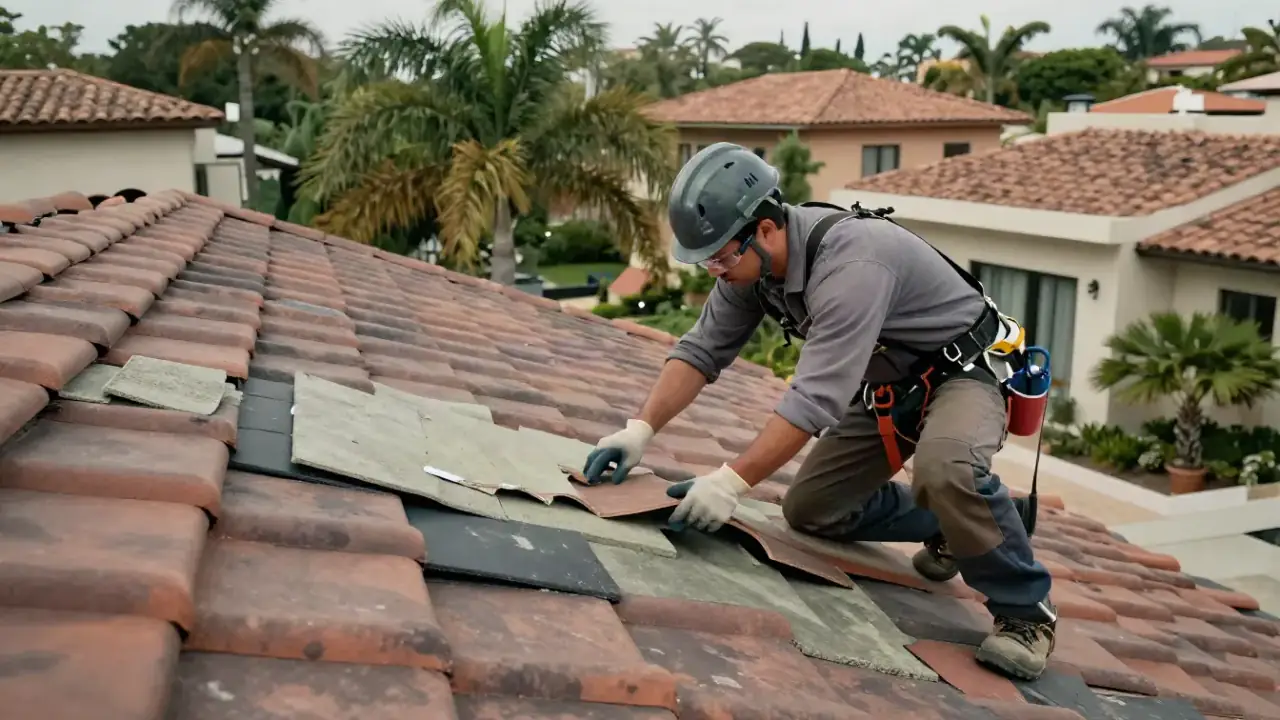
For most Delray Beach homes, concrete tile is the better pick for Florida's climate: it costs 20-35% less, carries the same Florida Building Code wind rating as clay when installed to spec, and holds color longer under our UV load. Clay still wins on one thing - it shrugs off salt air for 50+ years without the surface chalking that eventually dulls a concrete tile.
Concrete vs clay tile roofs in Florida's climate is really a question about how each material handles three local stressors: year-round humidity, salt-laden coastal air, and 140+ mph hurricane gusts. We repair both every week across Delray Beach, and the failure patterns are different enough that the right answer depends on your block, your budget, and how long you plan to stay.
Below we break down how each tile ages here, what 2026 repair and replacement costs look like, and the specific mistakes we see on roofs from Seagate to Kings Point.
The Short Answer: Which Tile Wins in Delray Beach
Concrete tile is the better value for the average Delray Beach homeowner, while clay tile is the better long-term material for coastal properties where salt exposure is constant.
Concrete tile roofs in South Florida typically run $10-$16 per square foot installed in 2026, versus $18-$28 for clay. A 2,000-square-foot roof footprint means roughly $20,000-$32,000 for concrete and $36,000-$56,000 for clay. Both meet the Florida Building Code's High-Velocity Hurricane Zone requirements when the fastening pattern is right.
The catch: neither tile is waterproof. The tile is the armor; the underlayment underneath is what actually keeps water out. On both materials, that underlayment is the first thing to fail - usually between year 15 and year 25 in this climate. If you want the full picture of how we handle that, our Tile Roof Repair Delray Beach FL team works on both tile types daily.
How Florida's Climate Actually Attacks a Tile Roof
Florida's climate attacks a tile roof through three mechanisms that rarely show up together anywhere else in the country: sustained humidity, intense UV, and salt aerosol.
Delray Beach averages roughly 75% relative humidity and about 61 inches of rain a year, most of it between June and October. That moisture never fully dries out of the underlayment layer. Add surface temperatures that push 140-160°F on a west-facing slope in July, and the asphalt underlayment embrittles faster than it would in a drier state.
Salt is the third factor. If you live east of Federal Highway - Seagate, Tropic Isle, the beachside blocks - your roof sees salt aerosol year-round. Salt doesn't eat clay or concrete, but it accelerates corrosion on the fasteners, flashings, and valley metal that hold everything together.
What that means practically:
- Underlayment life: 15-25 years here versus 30+ inland.
- Fastener corrosion: visible rust on nails and clips within 12-18 years on coastal roofs.
- Biological growth: algae and mildew streaks appear within 2-3 years if the roof isn't cleaned.
We see this pattern constantly in Seagate Tile Roof Repair calls, where the ocean is close enough that salt spray reaches the ridge line.
Concrete Tile Roof Benefits in South Florida
Concrete tile roof benefits in South Florida come down to cost, availability, and wind performance that matches clay without the price tag.
Concrete tiles are made from a sand-cement mix, molded and then surface-treated with a color coating. They weigh 9-12 pounds per square foot installed - heavy enough to need proper structural support, but lighter than most clay profiles. That weight matters when you're re-roofing an older Delray Beach home that wasn't engineered for tile in the first place.
Three reasons concrete dominates new tile roofs here:
- Price. Roughly 40% cheaper than clay for the same coverage.
- Color range. Barrel, flat, and S-tile profiles in dozens of colors - easier to match an existing roof when you only need a repair.
- Wind ratings. Approved assemblies carry Florida Product Approval for 150+ mph in the HVHZ.
The trade-off is surface wear. Concrete tile's color layer chalks and fades after 12-20 years of UV exposure. It doesn't fail structurally, but the roof starts looking tired. A Tile Roof Coating and Sealing Delray Beach FL application every 10-12 years restores the color and adds a water-repellent layer that buys the underlayment more time.
Clay Tile Roof Pros and Cons in Delray Beach
Clay tile roof pros and cons in Delray Beach FL split cleanly: unbeatable longevity and salt resistance on one side, high cost and brittleness on the other.
Clay tile is fired at 1,800-2,000°F, which fuses the color into the body of the tile rather than coating the surface. That's why a 60-year-old clay roof in Palm Trail or Del-Ida Park can still hold its original terracotta tone. Clay doesn't chalk, doesn't fade, and doesn't care about salt.
The cons are real:
- Cost. $18-$28 per square foot installed - roughly double concrete.
- Weight. 10-14 pounds per square foot; some older homes need structural reinforcement.
- Brittleness. Clay cracks on impact - a dropped branch, a foot placed wrong during an inspection, or hail.
- Matching. Sourcing an exact profile and color for a repair can take weeks.
When a clay tile cracks, water gets behind it and the underlayment takes the hit. That's a job for Broken and Cracked Tile Repair Delray Beach FL - we stock common profiles and can often match a discontinued tile from salvage.
Side-by-Side: Weight, Wind Rating, Lifespan, and Cost
A side-by-side comparison of weight, wind rating, lifespan, and cost shows concrete winning on value and clay winning on longevity, with wind performance essentially tied.
FactorConcrete TileClay TileInstalled cost (2026)$10-$16/sq ft$18-$28/sq ftWeight9-12 lb/sq ft10-14 lb/sq ftWind ratingUp to 150+ mph (HVHZ approved)Up to 150+ mph (HVHZ approved)Tile lifespan40-50 years50-75+ yearsUnderlayment life15-25 years15-25 yearsSalt resistanceGoodExcellentColor retentionFades in 12-20 yearsFires into the tile - permanentNotice the underlayment line. It's identical for both, and it's the number that drives most repair calls we get. Tile outlives its underlayment by decades, which is why a 20-year-old roof can look perfect from the street and still leak into the attic after a summer storm.
Which Is Better, Concrete or Clay Tile, for Your Delray Beach Home?
Which is better, concrete or clay tile, depends on three things: how close you are to the ocean, how long you plan to own the home, and what your roof structure can carry.
If you're within a half-mile of the beach - Seagate, Tropic Isle, the barrier blocks - clay's salt immunity is worth the premium, especially if you're staying 20+ years. If you're west of Swinton Avenue in a neighborhood like Rainberry Bay or Kings Point, concrete gives you 90% of the performance for 60% of the cost.
Structural capacity is the tiebreaker. A 1960s ranch that's never had a tile roof may need truss reinforcement for clay's extra 2-4 pounds per square foot. We check that before quoting either material.
One more consideration: if you're only replacing a section, matching the existing tile usually decides it for you. We handle Tile Re-Roofing and Restoration Delray Beach FL on both materials and can tell you in one visit whether a partial repair or a full tear-off makes more sense.
What to Watch Out For on Tile Roofs Here
The most common tile roof mistakes in Delray Beach involve ignoring the underlayment, walking the roof wrong, and letting small flashing failures turn into interior water damage.
Here's what we see most often:
- Judging the roof by the tile. Cracked or missing tiles are visible; failed underlayment isn't. A 20-year-old roof with perfect tile can still be leaking.
- Pressure washing. A pressure washer strips the surface of concrete tile and shatters clay. Soft washing is the only safe method.
- Ignoring valley and flashing rust. Coastal salt eats valley metal in 12-18 years. Once it's gone, water runs straight into the decking.
- Letting ridge tiles loosen. After a named storm, ridge and hip tiles shift. Re-securing them early prevents the whole ridge line from lifting in the next blow.
- Skipping post-storm inspections. Wind damage often shows up as hairline cracks that aren't visible from the ground.
If you're not sure what you're looking at, a Tile Roof Inspection Delray Beach FL takes about 45 minutes and gives you a written condition report on tile, underlayment, flashing, and fasteners.
When to Call a Professional
Call a professional when you see cracked tiles after a storm, water stains on your ceiling, or granules and tile fragments in your gutters - those are the three signals that the roof has moved past cosmetic wear.
Small stuff you can handle yourself: rinsing off debris, noting where tiles look displaced, checking the attic after heavy rain. Everything else needs eyes on the roof. Tile is brittle, the underlayment is hidden, and a misstep on a 6:12 pitch can crack three tiles and start a leak.
Our team at Delray Beach Tile Roof Repair handles both concrete and clay, from single-tile repairs to full underlayment replacement. We give you a straight answer on whether you need a repair or a re-roof - no pressure either way.
Frequently Asked Questions
Which is better for Florida's climate, concrete or clay tile roofs in Delray Beach?
Concrete is better for most Delray Beach homes because it costs 20-35% less and meets the same wind code. Clay is better within a half-mile of the ocean, where salt resistance justifies the premium over a 20+ year ownership window.
How does clay tile hold up in Delray Beach FL?
Clay tile holds up 50-75 years here, and it's the only tile that doesn't fade or chalk under our UV load. The weak point is the underlayment beneath it, which still needs replacement every 15-25 years regardless of how good the tile looks.
Are concrete tile roofs good for South Florida?
Yes. Concrete tile is the dominant roof material in South Florida for good reason: it's rated for 150+ mph winds, handles humidity well, and costs $10-$16 per square foot installed in 2026. Plan on recoating the surface every 10-12 years to keep the color.
What tile roof material lasts longest in Delray Beach?
Clay lasts longest - 50-75+ years versus 40-50 for concrete. But the underlayment under both fails at 15-25 years, so the real question is how many underlayment replacements you'll pay for during your ownership.
Do I need to replace my whole roof if a few tiles crack?
No. Cracked tiles are usually a repair, not a replacement, unless the underlayment underneath is already past its service life. We inspect the deck and underlayment before recommending anything, and most cracked-tile calls end as same-day repairs.
Get Help With Tile Roof Repair in Delray Beach
Whether your roof is concrete or clay, the repair process starts the same way: we get on the roof, find what's actually failing, and tell you straight what it takes to fix it.
Call Delray Beach Tile Roof Repair at (561) 342-0635 to schedule an inspection or a repair. We work on both tile types across Delray Beach and the surrounding coastal neighborhoods.